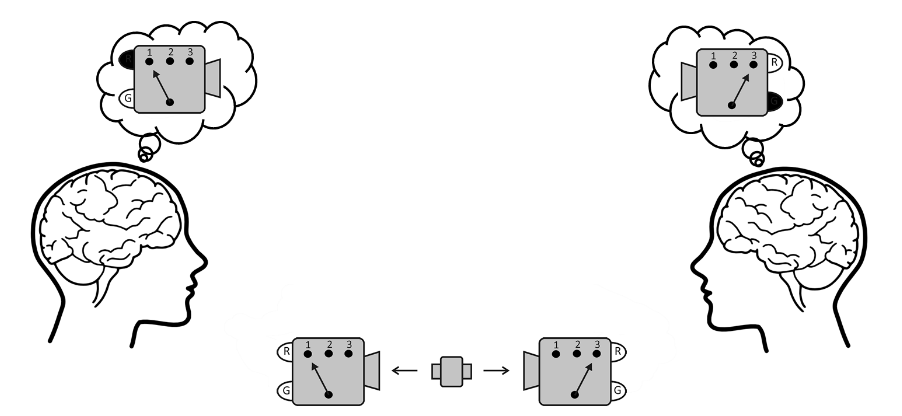
Tuesday, 3 November 2015

EVIDENCE OF THE SUPERNATURAL

+Rolo Beorn
DO NOT REPLY - BE PATIENT I'M STILL EDITING THIS AND THE ARGUMENTS ARE SUBJECT TO CHANGE

FEEL FREE TO REPLY WITH YOUR STRONGEST COUNTER-ARGUMENTS, IF NOT, JUST ACCEPT THE FACT THAT SCIENCE IS LIMITED AND CANNOT EXPLAIN MANY NATURAL PHENONMENONS

I showed you the evidence for the spiritual world. It was not a proof - I am assuming that you are intelligent enough to know the difference between "evidence" and "proof". If that assumption is false, then check it out in a dictionary or something.

I gave evidence for rational belief in the supernatural world in the response I gave. You know that response right? Yeah ... the one you appealled to your emotional subjectivity and found very "ludicrous" and "pointless" an deleted because the arguments there were so sound, you couldn't handle the truth.

EVIDENCES FOR THE SUPERNATURAL
FIRST EVIDENCE - 1. Non-Locality OR Spooky Action At A Distance (SAAD)
I explained Spooky Action at a Distance (SAAAD) and told you that you made a strawman - this is because I was never arguing that SAAAD is proven science. I was arguing that SAAAD is UNEXPLAINED science. I told you what Kip K. Sewell wrote in his book "The Cosmic Sphere" that SAAAD means that...

...A can affect B without either touching B or without interacting with anything touching B. That is, non-local interactions are unmediated. A non-local interaction can connect two locations or local objects without crossing space between them. Einstein referred to non-locality as "spooky action-at-a-distance" (SAAAD). Voodoo magic and other kinds of supernatural and paranormal phenomena are often though to to be instances of non-local phenonmenon. Imagine a witch doctorpoking a needle into a voodoo doll, while simultaneously the person represnted by the doll collapses in pain. This is an example where object A - the needle in the witch doctor's voodoo doll - affects object B - the doll's victim - without touching directly the victim or causing any physical reactions between the doll and the victim to take place.

Unlike local influences, which tend to mitigate, non-local influences are always unmitigated. They do not weaken or diminish over distance. The remain as strong across billions of light-years as from a few millimeters. Non-local influences are also always immediate rather than consecutive. There is no speed of transmission for a non-local influence; non-local interactions are instantaneous. Hence, while local influences are mediated and tend to be mitigated and consecutive, non-local influences are *unmediated, unmitigated, and immediate. (1)

This has led scientists to believe that spooky action may be controlled by something existing beyond conventional spacetime.  In other words, there is now scientific evidence for the existence of nonmaterial reality. (2)
So before you go about debunking strawman (as you're an expert on this) ... maybe you should first listen to what I have to say. You say science explains the unmediation, unmitigation and immediate-ness of SAAAD ... you said in the comment you produced when you jumped the gun:

2 entangled particles behave as a single wave. and then In science you observe and study things.

My query is not the fact that we merely observe things, but that there is no coherent explanation for how these things behave.

You later said:

The study contains the explanation of the observation.

I agree that the study contains "observation" but REALLY? It also contains "explanation"!!!? Wow! You will be the first person to explain this to me. Study what wikipedia has to say on the subject (3) and study wikipedia's references if you want something more credible

_1. Quantum entanglement is a physical phenomenon... _
I am sure your are intelligent enough to know what a phenonmenon is and I do not have to give you the dictionary definition.

2. As described above, entanglement is an experimentally verified and accepted property of nature, which has critical implications for the interpretations of quantum mechanics. The question becomes, "How can one account for something that was at one point indefinite with regard to its spin (or whatever is in this case the subject of investigation) suddenly becoming definite in that regard even though no physical interaction with the second object occurred, and, if the two objects are sufficiently far separated, could not even have had the time needed for such an interaction to proceed from the first to the second object?"[44] The latter question involves the issue of locality, i.e., whether for a change to occur in something the agent of change has to be in physical contact (at least via some intermediary such as a field force) with the thing that changes. Study of entanglement brings into sharp focus the dilemma between locality and the completeness or lack of completeness of quantum mechanics.

This is my question: You are an Atheist right? You believe in materialism right? Can you justify this phenonmenon in materialism why two objects could even begin to get entangled in the first place when there is no-physical or no-material connection whatsoever between them?
Atheism has no answer to this.
Brilliant People are already talking about *"nonmaterial reality" (2) ... maybe you topo should start believing in it.

SECOND EVIDENCE 2. - String Theory
I am going to assume again that you are a very intelligent person and you know about Sting Theory and its 11 dimensions. These dimensions are very coherent with our matematics. If my assumption is wrong and you are not-intellectually knowledgable of String Theory, Rob Bryanton made a good video to help people struggling intellectually to conceive and understadn the extra-dimensions of String Theory. If materialism is all that exists... why is our matematics coherent with the fact that other greater realms could exists side by side with this reality?

THRID EVIDENCE 3. - Super String Theory (7)
From the axiomatic core mathematical argument of Supersymmetry (SUSY) (4)... if "string theory" was not sufficient for you - get a load of this - we even have SUPER string theory amd its SUPER extra-dimension.The SUSY Standard Model connotes that there are things called Superpartners (5) where particles in this natural world are called sparticles in the supernatural world or electrons in this natural world are called selectrons in the supernatural world. These are what our theorectical physicists are saying are they desperately try to give a coherent mathematical EXPALANATION to the Higgs Boson they OBSERVED at the Large Hedron Collider (LHC).
So tell me Mr Naturalist/ Materialist ... why is it that our mathematics is very coherent and rational to posit a Supernatural world?

FOURTH EVIDENCE 4. - Historicity
Over 90% of our eminent and distinguished historians are saying that it is rational to believe Jesus existed. Why is our history correlating MORE to the fact that Jesus existed? Oh... here are evidences for you to chew on (6). And the liklihood of Jesus Resurrecting shows that it is much more rational to believe that Jesus Rose from the dead than to not. (I can give more arguments for this if you ask).

So tell me Mr Naturalist/ Materialist .... you said that there are explainations to all these phenonmenons in materialistic/ atheistic language ... please ... tell me. I am waiting patiently. Don't disappoint me.

God bless you

REFERENCES
(1) The Cosmic Sphere By Kip K. Sewell
(2) http://astrozet.net/files/Nonmateng.pdf
(3) https://en.wikipedia.org/wiki/Quantum_entanglement
(4) https://en.wikipedia.org/wiki/Supersymmetry
(5) http://www.dummies.com/how-to/content/string-theory-for-dummies-cheat-sheet.html
(6) https://www.youtube.com/watch?v=zrRQqYGf4O0
(7) https://www.youtube.com/watch?v=x7-TLgDg54o

Atheism - the huge Unfalsifiability Fallacy

+Luizifer Behel

From the video:
Caller: What proof and evidence do you have that Atheism is correct?
_Matt: ...Atheism ... is not accepting the God hypothesis ... it _cannot be proven to be true

The website "Logically Fallacious" defines unfalsifiabilty fallacy as:

(D1) Confidently asserting that a theory or hypothesis is true or false even though the theory or hypothesis cannot possibly be contradicted by an observation or the outcome of any physical experiment, usually without strong evidence or good reasons.
Making unfalsifiable claims is a way to leave the realm of rational discourse, since unfalsifiable claims are often faith-based, and not founded on evidence and reason. (1)

Here are ways Christianity can be falsified so that you will not be ignorant about the Christian's position:
1. Historical Evidences of Jesus (2)
2. Cosmological Argument (3)
3. Moral Argument (4)
4. Teleological Argument (5)
5. Lots more (6)

What does the Atheist say in response?
Atheist: I'm not convinced
Christian: This is not about convincing your _subjectivity. This is about laying down good, strong, ground logic that is objective from your subjectivity if not, this would be a subjectivist fallacy. Can you please provide any better counter-arguements devoid of fallacies so that I can scrutinise its logical objectivity?_
Atheist: Atheism is the absence of belief in God, it is not a claim for anything
Christian: Then that means that Atheism cannot make a knowledge-claim that I am right or wrong. Then you are Agnostic. And since Atheism is just the simple absence of believe, that definition says everything your subjective psychology and nothing about the objective external real world that is out there. It would have been better if Atheism was the absence of objective evidence - but look at all those evidence. Hence,

1. Not only is Atheism a huge unfalsifiable fallacy as per the afromentioned definition (D1),
2. Atheism is also a huge Subjectivist Fallacy
3. Atheism lacks an ontologically objective position to assert it's truth values

Here is a caricture of how the General New Atheists contradict themselves in our popular culture:

I don't know if God exists but I know that it is wrong for you to infer a God. I have no objective opinion on the evidence for either-side (God or no-God) and I cannot argue against the theist position; but I'm still gonna argue as if I know something that you are wrong to infer God. I don't know, but I kow that the Christian is wrong irrespective of the fact that it logically contradicts my claim that I dont know. I think there exists the knowledge that the Christians are wrong, but I do not have that knowledge - but I will argue as if I have that knowlege. Although you have shown your logical burden of proof in many arguement - i know that _ALL those arguments are objectively wrong not because you have followed the unfallacious and credible rules of objective logic, but because you have not satisfied nor convinced my personal qualia subjectivity. _Hence, Atheism is ignorant of its postion and even I really don't know if it is correct to say "I don't know". My actions say "I know" but my words are "ignorant".

Seeing that you are a copy-cat - i have justified myself. Feel free to copy me again but this time if it appeases your subjectivist fallacy but do it in favour of your atheism lol. Or you can just go away and ignore me because if truth be told, you have no better rebuttal whatsoever. This should be interesting ^_^

God bless you

REFERENCES
(1) http://www.logicallyfallacious.com/index.php/logical-fallacies/179-unfalsifiability
(2) https://www.youtube.com/watch?v=qEuj-HFbOzU
(3) https://www.youtube.com/watch?v=6CulBuMCLg0
(4) https://www.youtube.com/watch?v=OxiAikEk2vU
(5) https://www.youtube.com/watch?v=UpIiIaC4kRA
(6) https://www.youtube.com/watch?v=B2PEgRfdlTE

Thursday, 17 September 2015

IMPLICIT CONTEXTUAL CATEGORY DISPUTE CONTENTIONS AND PHRASEOLOGY

https://plus.google.com/106774038347107328330/posts/YbZaetpCuQx
+z08840
My very good friend whom I love reading his discussions. Whoop whoop!!! I finally come back to you and now I'm able to reply you. I hope you are as excited as I am lol. Don't mind me - enough of the formalities. I just want you to know that I fully respect you and honor our discussions.
Now let us get into replying you bro :)


>This is true Scotsman argument becauseno, it's notknowledge of "more than Thomas Aquinas" is a requirement to be a "well educated student" - by definition of "well educated"learn your fallacies
HAHAHAHAHA... are you actually taking me seriously. OK OK... sorry for that. I am going to assume that you are taking me seriously. I noticed that you are more of a "science guy" than you are of a "philosophical guy" ... and I see you using the infamous Hitchen Razor saying
"What can be asserted without evidence can be dismissed without evidence." 
Please, show me the evidence where it is written:
"Thou must have more knowledge than Thomas Aquinas to be called a "well educated highschool student"
Please show me the evidence if not, I dismiss it as an argumentum ad lapidem hahahaha


>Secondly, this is an argumentum ad novitatem
no, it's not

OK bro... thanks for making that clear :)


>This is because you are using the present day to debunk logical credibility of the past. appeal to novelty states "it's true because it's new/modern" 

learn your fallacies

Oh I greatly apologise if I was sounding ambiguous. I had just finished writing a long ass reply that day and I was very low on energy, weak and tired. So I do apologise on the ambiguity. You are a harsh scrutiniser than I expected. Not even taking into consideration the fact that I said:
hey bro... I'm gonna answer you quickly coz I gotta go. I'll reply you tomorrow if you have a counter-reply :). I'm tired and exhausted from that long ass reply hahaha.
I guess you only deserve perfection. OK... I will not reply you ambiguously this time. But I will show you the honor of of a through verbiage and logical scrutiny :) ... You want it? You get it :)
brain ticking

This is why I think it was argumentum ad novitatem

Simple Answer: Speculative Assumption
I know that I am not in your brain so I guess when you say that it was not your intention, then I guess that you, being the originator of your intentions, you can only be trusted :). So, as a friend to a friend, I grant you the honour and mutual respect of believing you. OK  I accept.

Further Buttress

But I further noticed your last statement it's disingenuous to appeal to this corpse today
Please sir, concentrate on the last two words corpse and today
Corpse: I did some research into the CONTEXT (ie Thomas Aquinas) and noticed that he died in 1274 which is a very long time ago
today: In this context, I believe you meant this present day and age
So, I fully apologise for confusing what you were trying to imply. Both of us were ambiguous that day. So... by implication of Corpse to Today, I drew the speculative assumption that you were dismissing the "objective soundness" of a logically warranted argument, not by simply producing a logical counter-argument, but due to the genetic fallacy that it originated in the past and not nowadays. All this is an explanation why I speculatively assumed that you were dismissing Thomas Aquinas Efficient First Cause Argument.
So please, I humbly ask, can you re-iterate to me why you're dismissing Thomas Aquinas Efficient First Cause Argument. Thanks bro
PS: His "Argument"; not his "person" - if not, that would be an Argumentum ad hominem.


*our understanding of logic makes it not true ("how do you know?" part)our knowledge of reality makes it false ("false" part)*


[embed]https://www.youtube.com/watch?v=XbLJtxn_OCo[/embed]
That is very true. Indeed I applauded this bro as it is a very valid point: Logical Epistemology (how we come to know logic) is very much different from Logical Ontology (The Objective Reality of Logic). But you see, as much as I agree, this is a straw man. I was not dichotomising Logical Epistemology vs Ontology but Present Time VS Past Time. Now let us criticise your argument.
Notice you used the word "our" here twice. Who are you dichotomising?

Hypothesis to Understanding what you are implying

(1) Thomas Aquinas VS the whole present day world
(2) Thomas Aquinas Past Day and Age VS This present Day and Age that we live in
If you meant (1) then that is an unfair parallel. Teaming the whole present day world versus 1 man is unfair and biased in my opinion.
If you meant (2), then this is a fair parallel and I credit you for it. Time VS Time sounds very unbiased to me. However, my contention here as to why you are rejecting the Credibility of the Objectivity of Thomas Aquinas LOGICAL Argument is because his time is different from our time. You give an argumentum ad lapidem because you assert this without any evidential demonstration of which premise fails to be logically fallacious other than Appealing to Ignornace that "we don't know" - which is not an a valid argument. Please follow this reference (1) and look for "Argument from Ignorance" so that you and I are on the same semantics and phraseology about the definition of an "Argument from Ignorance". An example of you using the Argument from Ignorance was when you tried debunking Thomas Aquinas Efficient First Cause Argument Premise (1) saying and I quote:
1. false
2. even if we wouldn't know it's false, how do you know it's true? assumption, premise dismissed
Hence, you dismissed the validity of a logical argument based on the assertion that it cannot be known for absolute certainty. This by definiton in Reference (1) is what we call "An Argument from Ignorance".
So, rather than falling into the same pit of appealing to ignorance that "I do not know what this guy is saying therefore, I am right and he is wrong" ... I have tried to produce to you hypothesis to genuinely try to get to know you bro and know where you stand on this argument but I do not know you for absolute certainty. I do not mean to disrespect you... we only just started getting to know each other so, yeah... I'm enjoying building this journey with you :)
Secondly, you appear to Poison the Well. Here is RationalWiki's take on Poisoning the well (2) as I copy and paste:
Poisoning the well (also called the smear tactic) is a rhetorical technique and logical fallacy that uses the association of negative emotions to distract a subject from actual evidence in an argument.
The usual method is to point out the unpleasant nature of the person making the opposing argument, in which case it is a special case of a personal attack or ad hominem. In general, "to poison the well" means to pre-provide any information that could produce a biased opinion of the reasoning, positive or negative.
It can be done subtly or quite blatantly. A subtle way of poisoning the well would be to use particular adjectives in introducing something that would influence people who are about to hear an argument. In a more blatant display, someone can make an outright personal attack in an introduction. For example, asking people to remember that a person has been in prison before listening to their statements; the well is now "poisoned" because people are likely to distrust a person making an argument knowing that they're a convict, regardless of the reasoning that they put forward.
Please feel free to go and read it up for yourself in Reference (2).
Here, you have used emotional language in debunking Thomas Aquinas. You laid an accent on "Thomas Aquinas Corpse". Why was the emphasis laid on his corpse? Well, if you study Rationalwiki's take on "Emotional Appeal" (3) and study the subsection called "Emotion-baiting" where rationalwiki uses the word "hysterical woman" to show that it is pointless in the rational argument but it appeals to people's emotions to try and get the rational point across - which is a fallacy in my opinion. What I am trying to say is this:
"What is the Rational/ Logical Connection between Thomas Aquinas Corpse and Thomas Aquinas Argument? *
Does his corpse affirm or debunk his arguments in THIS CONTEXT?
Hence, this is why I consider it to be an emotional appeal.
Now you have used a negative emotion of Thomas Aquinas Corpse (as if if he were not a corpse but a living person today, that would make his arguments more rational and objective - Which I do not believe is logically valid) to distract a subject from the actual philosophical evidence (or thought experiment) in Thomas Aquinas Argument. Rationalwiki used the example of associating someone to be in prison so that people are likely to distrust him. This is not different on how you have associated Thomas Aquinas with either of my hypothesis in trying to understand you better
You have associated Thomas Aquinas:
Either of
(1) Thomas Aquinas Person or
(2) Thomas Aquinas Day and Age
with Thomas Aquinas Objective Logical Argument which makes it sound like Thomas Aquinas Objective Argument is contingent on his Person/ Corpse (ie Personal Incredulity) or his Day and Age (Genetic Fallacy) - I do not know, all this my hypothesis could be wrong, but forgive me for just assuming for now as this is progress to Scientia (4). So I hope I have made my stance in the way I am coming to understand your stance clear. If there is anything wrong, please feel free to chip in sir ^_^


Thirdly, you create a category error by equivocating Thomas Aquinas argument with Thomas Aquinas corpse.make a confession please - you pulled this nonsense right out of your ass, right?

hahahaha.... you funny guy. You jest. Ok... here is the semantics for "Category Error":
A category mistake, or category error, is a semantic or ontological error in which things belonging to a particular category are presented as if they belong to a different category,[1] or, alternatively, a property is ascribed to a thing that could not possibly have that property. (5)

The Category I was Talking about: The Soundness of Thomas Aquinas Objective Logical Argument
The Category you were talking about: The Soundness of Thomas Aquinas Person - ie Corpse
The reason I call this a Category Error is because my category does not have the same properties as your category in the contextual discussion flow we are having at the moment.


This is an appeal to ignorance.number (1) is exactly opposite - it's appeal to our knowledgenumber (2) is accusation of this specific argument, namely "There is an efficient cause for everything" to be an appeal to ignorance - you are projecting much - learn your fallacies

notice your use of "projecting much" with "appeal to ignorance". What am I projecting? I assume in this context its "projecting much knowledge". However, you give the impression its unwarranted knowledge which I understand but then you later go to say the opposite of projecting-knowledge ie appealing to ignorance. This is confusing ... am I projecting knowledge or ignorance in your context?
hahahaha ... I see that you are playing with Socratic Paradox hahaha ... ipse se nihil scire id unum sciat which means I know that I know nothing

Actuality

You: even if we wouldn't know it's false, how do you know it's true? assumption, premise dismissed
Me: This is an appeal to ignorance. You used absolute certainty to debunk and assumption - this is fallacious. Just because we do not KNOW for sure does not mean that we should sit on our asses and remain ignorant. This argument is a believe or assumption or confidence or trust or suspicion of what is most likely true and not a claim to absolute knowledge.
You: ...it's appeal to our knowledge...

Caricature

You: We cannot know this is true - therefore, dismissed (1)
Me: this is appeal to ignorance (1)
You: This is appeal to knowledge
You mean the knowledge that we do not have knowledge? hahahaha ... nice one Mr Phraseology lol. Even mathematic tells us that
Positive Times Negative is Negative
(+) * (
) = ()
So for attaching a Positive Assertion = I know; to a Negative Assertion = I don't know; you ultimately mean "I don't know". Hence, why are we playing this game of phraseology and contextual semantic dispute (6), I do not know lol. Hence, we come back to the ULTIMATE FACT that you do not know.
But if you are still going to be adamant on your proposition that you are appealing to knowledge and I am appealing to Ignorance, because you said that
number (2) is accusation of this specific argument, namely "There is an efficient cause for everything" to be an appeal to ignorance - you are projecting much
then let me show again my reply which was:
...You used absolute certainty to debunk and assumption...
Sorry for the typo error there lol. I meant an assumption lol. So much for me being tired and weary when replying you lol. OK. I did not want to end up giving you definitions and semantics because I thouht that would insult your intelligence but I have found it an utmost necessity since you scrutinize every single thing I say and almost mis-understand me into a straw man. So here goes:
Thomas Aquinas gave a

Syllogism: Logic. an argument the conclusion of which is supported by twopremises, of which one (major premise) contains the term (major term) that is the predicate of the conclusion, and the other (minor premise) contains the term (minor term) that is the subject of the conclusion; common to bothpremises is a term (middle term) that is excluded from the conclusion. A typical form is “All A is C; all B is A; therefore all B is C.”. (7)

as seen above, syllogisms contain
Premise: an ​*idea* or ​*theory* on which a ​statement or ​action is ​based. to ​base a ​*theory*, ​argument, etc. on an ​idea, ​*thought*, or ​*belief*: (9)
so I repeat again:
...You used absolute certainty to debunk and assumption...
Now I am not claiming that I KNOW for absolute certainty that There is an efficient cause for everything. It is a premise, beliefassumptionthought,suspicionconfidence etc

This is why when I say:
...You used absolute certainty to debunk and assumption...
I believe that you are comparing apples to oranges even though they are both fruits but its a Straw man, Category Mistake, Equivocation Fallacy and Ignoratio Elenchi. In sequitur, even though assumptions (abductions) andabsolute knowledge (deductions) are both epistemological, they are distinct in the their parts and concepts. Here is a link to the definition of Equivocation Fallacy (8) and Ignoratio Elenchi (10) so that you and I know that we are discussing on the same understanding and so that you stop accusing me for not learning my fallacies. At least, I'm doing as you've kindly advised me to do :)

So I am not "projecting much". You say this because you confuse what a "premise" is with "absolute knowledge". I believe it is much more abundantly demonstrable that there is indeed ...an efficient cause for everything...why?
Because anything that is not a first cause cannot be an efficient cause of itself. ... All this is logically warranted assumptions; not logically warranted absolute knowledge :)


it's not appeal to ignorance argument - appeal to ignorance sounds like this:*_"There is an efficient cause for everything (because we don't know anything to have no cause)" - this is your with Thomas argument;
besides we know there are uncaused effects :P_*

I will simply say "no". The extra part you added because we don't know anything to have no cause can be demonstrated to be false by the evidence of absence in Thomas Aquinas argument. Again Category Mistake for mistaking "premise"/ "assumptions"/ "belief" with "absolute knowledge".
Secondly, can you LOGICALLY demonstrate or GIVE REASONS why you think that effects (which are not first causes eg like God) can occur uncaused.
You can't just say a wonderful and magical statement like that and keep quiet. Extra ordinary claims rrequire extra ordinary evidences hahahaha - if not Hitchen Razor applies.


[embed]https://www.youtube.com/watch?v=WQ5a7Q-yGtk[/embed]

event-caused-by-other-event/event-caused-by-itselfthere is a third option (at least) - non-causedbesides "event-caused-by-itself" is nonsensical

thanks for agreeing with Thomas Aquinas and I when you say besides "event-caused-by-itself" is nonsensical because this is what Thomas Aquinas and I argue for the second half of premise 1 that nothing can be the efficient cause of itself. ... so whoop whoop yaaaaaay .... you agree halfway with Thomas Aquinas and I.
Your argument for the 3rd option is the argument we use for God. That is, God is uncaused or non-caused (which ever way you like to say it). So it seems to me that you already agree withthe logic of Thomas Aquinas and I that it is possible for uncaused entities to exist whoop whoop ... welcome to borderline-theism hehehehe ... thanks for presenting the false dichotomies - but when you think of it, you appear to be disagreeing but you ended up agreeing. Do you really believe that uncaused entities exists or are you trying to make me happy that you are starting to thing like a theist lol. In theism, uncaused entities are always necessary entities and not contingent. But it seems like, as you're a naturalist, you can show me that non-causality can occur. wow! almost sounds like magic. Like I could put my hands into a hat and bring out a rabbit without any tricks. Please, as a true naturalist, adhere to the definition of Causality (11)
Causality (also referred to as causation[1]) is the relation between an event (the cause) and a second event (the effect), where the first event is understood to be responsible for the second.
and prove to me that effects of events can occur without a responsible relationship or logical connection to a prior first cause. Show it to me and let me study, scrutinize and logically warrant it in all totality :)


disingenuouslet me alert you that any further disingenuous bullshit will result of calling you namesthank you for your understanding


[embed]https://www.youtube.com/watch?v=P1Ni_wn-OiQ[/embed]

[embed]https://www.youtube.com/watch?v=51rR4aC9aMg[/embed]
I checked the dictionary for disingenuous and saw it say:
lacking in frankness, candor, or sincerity; falsely or hypocritically ingenuous; insincere:
Calling me disingenuous is a metaphysical claim. You seem to know that I know the truth but I am purposefully withholding that from you. I have 2 questions for you
1. Do you absolutely KNOW for certain that I am disingenuous? Can you really see my intentions? Can you really see my heart?
2. Do you ASSUME or BELIEVE that I am disingenuous? If so, what are the logically warranted premises that made you make that assertion?

I am so confused as to why you would blame me metaphysically. Did I do anything to you to show that I was not taking you seriously? I even took extra time to reply you after giving
+
K railroads
 a long ass reply and this is what I get? Where did I go wrong? My Chief Sunday School Teacher told me that giving analogies/ examples is a very good teaching method... heck! ... even Wikipedia (13) using credible sources such as (12) saying demonstration by using examples is a great teaching method. Did I really offend you or were you going through a bad day that day or are you becoming emotionally wrapped up in your arguments? Even if you are, shouldn't it be positive emotions? Where is the mutual respect? You may thank me for understanding but I'm sorry I do not understand. What credible repeatable methodology you used to come to the conclusion that I am disingenuous? I am sorry but I did not come here to be insulted. +carmel Kainvited me here to have a discussion and not a fighting match like you do with +Alex Spevak. Have I not been mutually repectful to you enough?
I was not being disingenuous. This argument you are bringing up is the famous Freewill-Omipotence Paradox argument or the Omniscience-Omnipotence Paradox Argument. Please read them up for yourself and see how they've been debunked (14) & (15) & (16). These articles all show 1 thing:

It has not been demonstrated by the people who present this kinda argument, how (FOR)KNOWLEDGE implies causality and denies a person the potential to do alternatively  (11).

The burden of proof is on you making the claim.
There we go, simply explained without using (setup) analogies just exactly as you ordered in the menu. This should satisfy you.
So after abusing me and insulting me for creating analogies... you begin your rebuttal with an analogy? in your section called The Experiment ... I'm not pointing fingers here as to who the disingenuous one here because I have an objective moral standard that say that I should be merciful to people. This is nothing short of mafia style bullying. You tell me not to use "setups" but you end up suing the very same thing. I leave you to God.
But I will answer your premises coz that's why I'm here:
By indirect implication, I disagree with
if choice changed then X can not exist at T1, if choice didn't change then X can exist
even though I agree with it by definition of Omniscience.
You make it sound as if free will causal decisions or choices is in the ability to defy an omniscient being. Let X be the fact that i will write (JLY) in this BRACKET. If it changed and were not so, then then God cannot know that I will write (JLY) in this bracket. If it changed did not change then God did know that I would write (JLY) in this bracket all prior to this time that I would write it. What you have done is describe omniscience. Thats all. You have ignored my analogy because only you can give analogies but not others. I repeat, you have not demonstrated how (FOR)KNOWLEDGE implies causality and denies a person the potential to do alternatively.
I do not know how much on the philosophy of Free Will you have studied. But notice the implicit assumption I make regarding my definition of Free Will - ie Free will is the ability to self-originate or self-perform or self-cause the potential of other alternatives as I said in my first opening response titled FREEWILL EXISTS, AT LEAST, COMPATIBLY (17) where I gave 3 logical philosophical arguments for free will and backed it up with scientific arguments to re-affirm free will. So i beg to ask this ver important question which I really need answered:

"What is your definition of Free Will?"

My Philosophical Definitions


1.) The Origination Argument
2.) The Logical Fatalism Argument
3.) The Causal Fatalism Argument

My Scientific Back-Up

1.) Quantum Biology
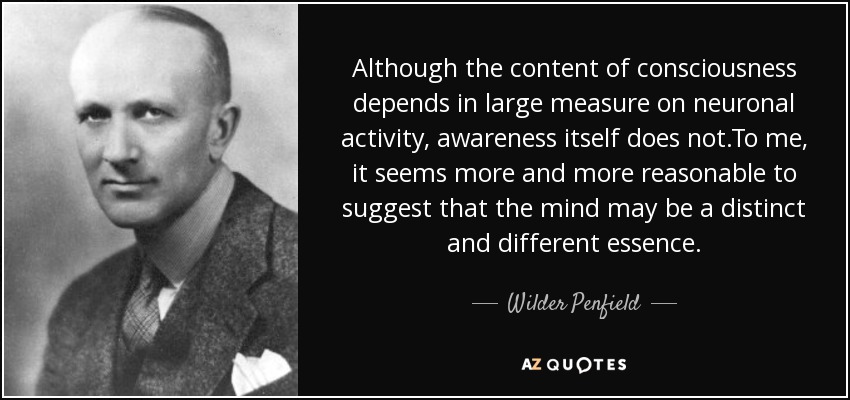
2.) Eminent Experiments from Roger Sperry, Wilder Penfields etc
9b65d-quote-although-the-content-of-consciousness-depends-in-large-measure-on-neuronal-activity-wilder-penfield-71-94-38
If you do not grant The Origination Argument, you run the risk of irresponsibly violating objective moral and duties. You may become morally irresponsible like +Alex Spevak who told me that we have locked criminals in prison falsely because they are not the originators of their actions. Hence, rapists can never really be OBJECTIVELY blamed because as Dr Richard Dawkins says
DNA just is and we dance to its music
But I leave that to your next reply. Have a wonderful day and...
...God bless you
[embed]https://www.youtube.com/watch?v=Iv3MiRyt7is[/embed]
REFERENCES
(1) http://utminers.utep.edu/omwilliamson/ENGL1311/fallacies.htm
(2) http://rationalwiki.org/wiki/Poisoning_the_well
(3) http://rationalwiki.org/wiki/Emotional_appeal
(4) https://en.wiktionary.org/wiki/scientia
(5) https://en.wikipedia.org/wiki/Category_mistake
(6) https://en.wikipedia.org/wiki/Semantic_dispute
(7) http://dictionary.reference.com/browse/syllogism
(8) https://en.wikipedia.org/wiki/Equivocation
(9) http://dictionary.cambridge.org/dictionary/english/premise
(10) https://en.wikipedia.org/wiki/Ignoratio_elenchi
(11) https://en.wikipedia.org/wiki/Causality
(12) Bruce, Catherine D., John Ross, Tara Flynn, and Rich McPherson. "Lesson Study and Demonstration Classrooms: Examining the Effects of Two Models of Teacher Professional Development." Google. CD Bruce, Aug. 2009. Web. 15 September 2010.
(13) https://en.wikipedia.org/wiki/Teaching_method
(14) http://philosophiesofmen.blogspot.co.uk/2010/12/omniscience-free-will-paradox.html
(15) http://www.comereason.org/omniscience-and-free-will.asp
(16) http://www.catholic.com/quickquestions/how-can-we-reconcile-free-will-with-gods-omniscience
(17) http://rdlogo.blogspot.co.uk/2015/08/freewill-exists-at-least-compatibly.html